How to Make Driveway White Again
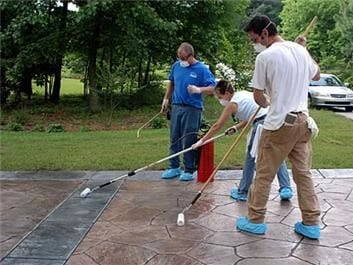
In general, picking a sealer to use on a concrete driveway is a balance of aesthetics and operation, along with what you are willing to pay to go that functioning. Keep in mind that choosing the right sealer and applying information technology properly will extend the life of your concrete and keep it looking great for years to come up, so y'all should buy the best product you can afford.
Here'due south the of import information you lot should know about concrete sealer for driveways:
WHY Y'all SHOULD USE A SEALER ON YOUR DRIVEWAY
Concrete, in general, doesn't have to be sealed to perform well, only the boosted benefits of applying a high-quality sealer to your driveway volition be worth the extra pennies per square foot the sealer will toll. Hither are the reasons why:
- Sealing a driveway not but extends it service life, information technology will also amend the appearance of decorative physical by enhancing the colour and gloss.
- Applying sealer to a driveway is not difficult, and in most cases a standard residential driveway can be sealed in less than a 24-hour interval.
- Applying a typical driveway sealer does not require expensive equipment or special skills, so a handy practice-information technology-yourselfer tin can often tackle the project. Or you can hire a qualified installer to do the work for yous.
Notice a contractor offer concrete driveway sealing most me.
TYPES OF DRIVEWAY SEALERS
The most common types of flick-forming driveway sealers are acrylic-resin based. Acrylic sealers provide the all-time performance characteristics for the toll, and they ofttimes are composite with epoxies, polyurethanes or silicones to amend performance, durability and water resistance. Acrylics, themselves, are too available in different forms, with some types delivering better performance than others. Styrene acrylic, for example, is a lower-operation acrylic resin that may yellow and dethrone when exposed to directly sunlight. The best type of acrylic is a virgin or pure acrylic resin. These sealers will last longer than styrene acrylics, with no yellowing.
Other types of topical sealers for driveways are polyurethanes, epoxies and penetrating resins. Generally, epoxy or polyurethane sealers cost considerably more than than acrylics and they tend to be higher build, and thus more slippery. They also don't let for wet vapor to motion out of the physical. Information technology'southward important that sealers used on exterior physical allow the passage of both air and moisture. If a sealer does not let for this move, especially wet, white hazing or fogging can occur between the sealer and concrete (encounter Preventing Moisture Issues).
Penetrating sealers are fabricated of specialty resins (silicones, siloxanes and silanes) that penetrate into the concrete and course a chemic bulwark to water, oil and other mutual contaminants.
Store for Concrete Driveway Sealers
WHAT IS THE BEST Physical SEALER FOR DRIVEWAYS?
To simplify the option process, I have broken downwards the most important factors to consider into three categories: Safety, Appearance and Operation. Merely remember the acronym SAP.
Rubber
The key consideration when sealing a driveway is safety. You desire the surface to be slip resistant once the sealer is dry. Most sealers designed for use on driveways will meet federal standards for slip resistance (besides known as the coefficient of friction) when the surface is dry. But this doesn't business relationship for how slippery the sealed surface is when wet.
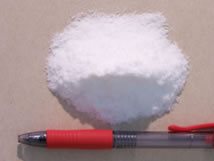
Slipperiness is determined by the amount of texture in the concrete, combined with the thickness of the sealer. Typically, the more sealer resin that's on the surface and the shinier the surface is, the greater the potential for a slippery surface. For instance, a smoothen concrete surface with a thick "wet-look" motion picture-forming sealer (encounter Concrete Sealer Types) will be very slippery when wet, while a stamped or heavily broom-finished concrete surface with that same wet-look sealer will non exist equally slippery. If you utilise a lower-gloss or thinner sealer, the surface will be even less slippery. Another pick is to add a grit or anti-skid additive directly to a moving-picture show-forming sealer as it'due south practical. There are several unlike types, ranging from clear polymer or plastic grit to white silica sand (see Making Concrete Sideslip Resistant). These additives assistance, merely simply to a certain point.
For the ultimate in condom, consider using a penetrating waterproofing sealer rather than a moving picture-forming production. A penetrating sealer produces no gloss and will not contribute to the slipperiness of the physical surface. Ever test the sealer in a small-scale, inconspicuous area on your driveway, in both dry and wet conditions, to ensure that it meets your safety needs.
Appearance
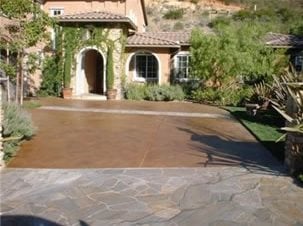
What do you want your driveway to look like after it's sealed, in terms of gloss level and colour enhancement? Similar paints, driveway sealers come in many gloss levels, including no-gloss, matte, satin, semi-gloss, gloss and high-gloss. Sealer manufacturers employ a standardized examination to mensurate gloss on a scale of 1 to 100, with 100 being the highest level of gloss (run into the tabular array below). Most sealer manufactures provide this gloss level measurement on the production packaging and in the technical data sheets. Simply to be sure you are getting the level of gloss you desire, it'south all-time to exam the sealer in an inconspicuous area of your driveway. (Meet Sealer Buying Tips)
| Sealer Type | Gloss Level | Finish |
| Solvent based | 80 -100 | Sleeky to high gloss |
| Water based | 50 - eighty | Matte to semi-gloss |
| Penetrating sealer | 0 | No gloss |
In terms of color, solvent-based film-forming sealers tend to darken or heighten the color of the concrete more than water-based sealers. Sealers with a higher solids content will also effect in more than darkening or colour enhancement, giving the surface that wet look some people discover desirable. The higher the solids content of a sealer, the higher the level of gloss. For example, an 18% solids content usually provides a semi-gloss finish while a 30% solids content volition impart a high gloss. Penetrating sealers do zilch to change or enhance the color of the physical.
If you're looking for a more realistic and natural stamped driveway, high gloss sealers should exist avoided. "I hardly ever get any customers request for a gloss look any more than," says C. J. Salzano of Salzano Custom Concrete in VA. "The trend is matte or a no-gloss expect, very natural. After all, aren't we trying to simulate natural stone? I don't know many stones that are naturally glossy." Sealers that provide color enhancement without producing a moisture or glazed appearance can be found. These new-generation sealers for stamped concrete come in both solvent- and h2o-based versions, and they are gaining wider acceptance in the manufacture. Yous tin also employ penetrating sealers, which were rarely used in years past, merely are likewise starting to gain mainstream acceptance.
Performance
Not all driveway sealers are alike (fifty-fifty those in the same product category), and no driveway sealer will last forever. Depending on the type of sealer used and exposure conditions, a sealer may last anywhere from ane to 3 years. The type and quality of the resin makes a big difference in how long the sealer volition final and how well it volition perform during its life bike.
Without going into a doctoral thesis on the chemical makeup and performance characteristics of driveway sealers, let's but say that you typically get what yous pay for. Lower-cost sealers bought at your local hardware store usually tin can't lucifer the quality and functioning of commercial professional-form sealers bought at a concrete materials supply house.
Buying TIPS
Before ownership any driveway sealer, read the technical information sheet as well equally the product label. Most suppliers volition have technical data available on their websites, and information technology tin can tell yous a lot well-nigh what yous're getting. Key words or phrases to wait for are non-yellowing, waterproofing, grit proofing, breathability and resistance to oil, grease, and acids. The product should accept detailed instructions on how to apply it equally well as recommendations for maintenance and re-application.
Also enquire the people backside the counter at the concrete products supply shop for their recommendations. Which concrete driveway sealer do they sell the most of and have the fewest number of complaints or call backs about? It's always better to spend a few extra dollars on a physical sealer with proven functioning than to become with a cheaper production that may fail early on and require stripping and removal.
HOW TO APPLY CONCRETE SEALER ON A DRIVEWAY
Before sealing, brand sure your driveway is make clean and dry (see How to Clean a Concrete Driveway). The ii most common methods of applying sealers to driveway surfaces are by roller or sprayer. E'er refer to the manufacturer's recommended application guidelines. As a general guide, solvent-based sealers are all-time spray applied while water-based sealers are best applied by roller.
Whether you are rolling or spray applying a sealer, ever strive for maximum coverage. The typical coverage rate is 250 to 300 foursquare feet per gallon. It's all-time to use two thin coats, making sure the sealer doesn't pool or form uneven, thick areas.
One time yous seal your driveway, you are notwithstanding committed to some regular maintenance. This usually consists of nix more a practiced lather and water cleaning, followed past a light re-application of the aforementioned sealer if needed. (See How to Maintain Your Physical Driveway.)
TECHNICAL ADVICE FOR SEALING Concrete DRIVEWAYS
Decorative concrete expert, and vice president of sales and marketing with ChemSystems Inc, Chris Sullivan, provides in-depth answers to mutual problems associated with sealing concrete driveways.
Question: Why practice car tires leave black marks on my sealed driveway? How do I avoid this and remove the existing tire marks? Respond: This is a phenomenon chosen "plasticizer migration." Plasticizers are polymer compounds added to rubber, glue and plastic to make them flexible. The rubber used to make car tires contains plasticizers to meliorate traction. But when the motorcar is driven, the tires rut up, causing the plasticizers to soften and leach out of the tire. When a hot tire is parked or driven on certain types of sealers, the plasticizers migrate into and discolor the sealer. The better the tire quality, the college the quantity of plasticizer-and the greater the chance for hot tire marking. Lower-quality tires are harder and contain less plasticizer, so they usually result in less hot tire marking on sealers. These blackness tire marks could have been prevented by using a different type of sealer. If switching to harder tires is not in the cards, and so consider using a different type of sealer. When a sealer cures, the resins cantankerous link, forming a pasty tangle, like a bowl of undercooked spaghetti. All sealers showroom some caste of cantankerous linking. The greater the cross linking, the denser the blanket and the more than resistant the sealer will be to hot tire marking. Nigh hot tire marks occur on acrylic sealers, which exhibit minimal cross linking. Using a higher-solids acrylic or a high-solids, highly cross-linked polyurethane or epoxy sealer will reduce hot tire marker greatly. These sealers form very dumbo films that limit or prevent plasticizer migration. Striking a good remainder of sealer immovability and density volition brand all the difference when sealing driveways and garage floors. To get rid of discoloration from hot tire marking, cleaning the surface with a concrete degreaser may be all that'southward needed, depending on the level of discoloration. If the discoloration has migrated deep into the sealer, yous may need to loosen the affected areas with a solvent or totally remove the sealer with a chemic stripper.Hot tire marks on a sealed driveway
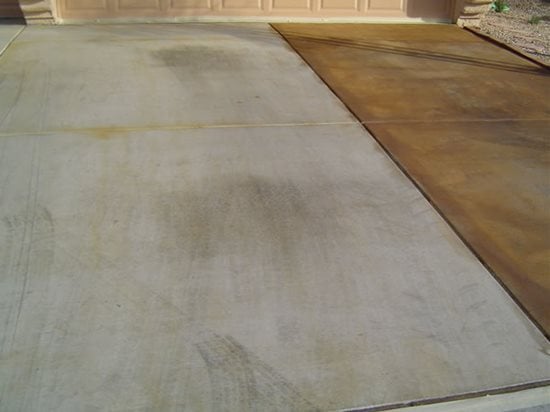
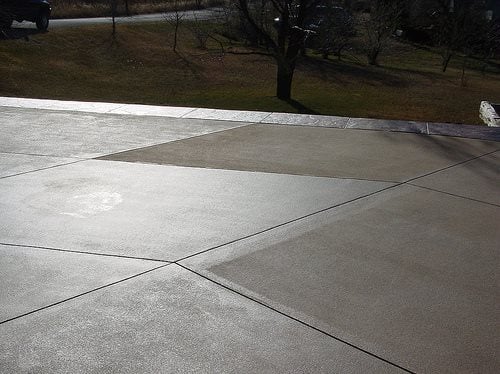
Question: This driveway was integrally colored and has a very light brush stop. The physical was yet color before sealing, merely dramatic color differences occurred after sealing (encounter photo). The whole driveway was sealed with one glaze of a water-based acrylic sealer. The sealer is in expert condition with no failures. What acquired the lite and nighttime colour differences, and how do I make the whole driveway uniform again? Answer: I constitute this state of affairs a bit perplexing at first, and had to practice some digging to figure out what happened. The commencement thing that came to listen was that the applicators who put down the sealer simply forgot to seal the sections that appear lighter. But upon closer examination, you lot tin can definitely run into that both areas have been sealed. I then thought that the darker area was sealed with multiple coats, and the lighter area with only ane. That idea was shot down when multiple parties confirmed that the unabridged area was sealed with only one coat of sealer. Poorly mixed sealer covers the light areas of this driveway while the nighttime areas are covered past the total-strength product. The suspension came when ane of the applicators stated that three 5-gallon pails of sealer were used on the driveway. Although each pail contained the aforementioned product, only cloth from the first pail was used on the light-colored areas. At my request, the applicators dug out the three nigh empty pails of sealer from the garage. A 1/4-inch-thick layer of resin remained at the bottom of the first pail, indicating that it wasn't thoroughly mixed prior to awarding. So much resin was left on the lesser, it was equivalent to applying a fifty% to 70% diluted sealer, with a consistency similar to water. This explains the lighter color on the first section compared to the darker sections, which had full-force sealer applied to them from the 2d and third pails. Over fourth dimension, water-based sealers can separate. Always stir the sealer prior to application to make sure all the resin is in solution. Later on stirring, let a few minutes for the air to escape, to avoid blisters and foaming during application. Fortunately, the fix in this case is easy. A second, very light application of sealer (properly mixed, of course) over the lighter areas should bring those areas into uniformity with the darker sections.Color differences on a sealed physical driveway
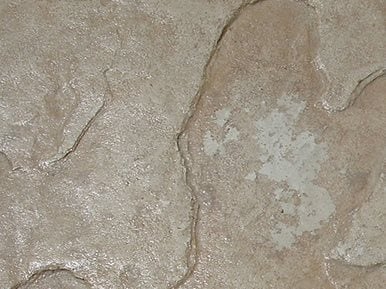
Question:What caused the sealer to fail on this stamped driveway afterward only 6 months? Answer:This project was placed using a low-cal biscuit colour hardener for the base color, followed past stamping with liquid release and a slate-patterned seamless skin. The secondary emphasis color is a medium-brown acrylic/booze tint. As the picture show shows, the sealer has failed, taking the secondary color with it and exposing the biscuit base color. The failures occurred only in low areas of the stamped texture and the driveway, as well every bit adjacent to the control joints (not shown). Sealer failure In that location are ii triggers at play here causing these failures. The first is overapplication of the secondary emphasis colour. With nigh stamped concrete projects, the secondary color should make up simply 10% to 20% of the visible color, whether the color is from a release powder or, as in this instance, a liquid tint. On this stamped driveway, the secondary tint makes upward over 90% of the visible color. With all the acrylic tint laying on the surface, the sealer is not really adhering to the physical, but to the thin layer of chocolate-brown pigment. Another clue is that the flakes of failed sealer (non shown) were colored brownish, when they should be clear. The 2nd trigger is moisture. These failures occurred in early on leap, ii weeks after the surface area experienced a 30-inch snowstorm. The rapid melt off left standing water on the surface, especially in the low-lying areas of texture every bit well every bit in the control joints. Pour drainage and slope caused this standing water to penetrate the already weak sealer, and failure occurred. If the sealer had been well adhered, discoloration might have occurred but probably not failure. Chances are the remaining areas of the driveway will neglect over time because of weak adhesion acquired by overapplication of the secondary color. The prepare for this driveway is to strip all the sealer. This procedure normally removes the excess offending secondary color as well. In one case the area is cleaned, additional Lite tinting can be performed, followed by proper cleaning and drying and surface resealing. Additional information on stamping and coloring can exist found in Bob Harris' Guide to Stamped Physical. Fixing sealer failure on a stamped concrete driveway
Source: https://www.concretenetwork.com/driveway-sealer/
0 Response to "How to Make Driveway White Again"
Post a Comment