Crank Yankers Play That One Song Again
How the Hell Do You Make a Prank Phone call in 2019?
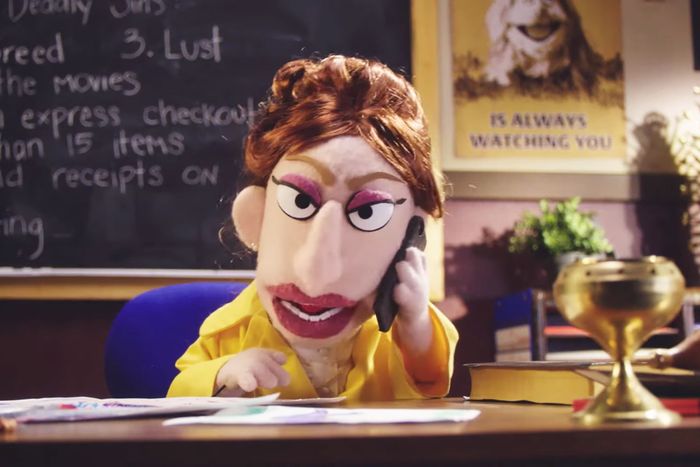
Crank Yankers. Photo: YouTube
The digital revolution has left plenty of in one case-beloved formats cleaved and twitching on the floor, from CDs and newspapers to brick-and-mortar retail chains. Merely one thing that's remained surprisingly resilient in the face of technological change is the prank telephone call.
A practical joke that grew organically out of the first telephone lines more a century ago, prank calls are every bit established a format in comedy as stand-up or sketch. And notwithstanding only a sliver of people have carved a career out of prank calling, and you can probably count them on one hand: the platinum-selling but nevertheless underappreciated Jerky Boys, the Creepo Yankers crew, and the bulldoze-fourth dimension jockeys who followed Howard Stern'south career path — by and large raunchy dudes looking for button-pushing, adolescent thrills.
"Information technology's just improv, really, with an unwitting audience of one, and that's what I dearest," says Jimmy Kimmel, Crank Yankers' co-creator and producer. Kimmel, who withal keeps a few Crank Yankers puppets in a makeshift shrine in his office, traces the beginning of his prank-call obsession to age 10, when he began making them with best friend Cleto Escobedo 3 (now his bandleader on Jimmy Kimmel Live!) in Las Vegas. "I'd sleep over at his house pretty much every night — 30 nights in a row one summertime — and we'd spend the whole night only trading off calls," said Kimmel. "I e'er wanted him to brand the call because it's more than fun to listen in." Kimmel and Escobedo continued a record recorder to a suction loving cup from Radio Shack to brand low-quality recordings from their phones, which they would so play back for friends.
Now, those aforementioned late-night sessions are conducted over YouTube and Twitch with the aid of vocalisation-irresolute software that masks the caller'south IP address. With a new generation of digital pranksters leading the style, a Crank Yankers reboot on One-act Key, and a documentary on Colorado cloak-and-dagger prank-fable Longmont Potion Castle making the rounds this year, a revival of the humble prank phone call all of a sudden seems plausible.
Simply that assumes prank calls are fifty-fifty still relevant. Because honestly: How the hell do you make a prank telephone call in 2019? Things have changed drastically since their 1990s and early on 2000s heyday. Blocked numbers and ignored voicemails are routine. The U.S. government'due south ain, actual propaganda chokes news feeds, while swatting, doxxing, and deep fakes are increasing fixtures of online life. A format that has always depended on static technology now finds itself grappling with the endless, non-and then-funny ways in which it can be subverted.
"It's not like we don't communicate anymore," says Jonas Larsen, Comedy Central's executive vice-president of talent and development. "We just communicate differently than nosotros used to. Nosotros obviously don't use landlines much, but with cell phones and social media and text and e-sports and all these other platforms, information technology just felt similar there was a huge universe to tap into."
That'southward why Crank Yankers volition return with tweaks that acknowledge the 12 years since it went off the air. Like almost reboots, the tropes information technology formerly leaned on — topical references and catchphrases, technologically specific jokes — accept grown wobbly with age.
For nigh of their beingness, sound-only pranks occupied a infinite somewhere between juvenile lark ("Excuse me, but is your refrigerator running?") and surreal social experiment (Orson Welles's 1938 radio hoax War of the Worlds). With no bulwark for entry except access to a telephone and the ability to speak, nearly anyone could pick up a receiver, dial a number, and harass Wendy'due south employees, cops and, occasionally, the odd world leader.
"Whoever invented the prank call was braver than today'due south bored teens," wrote Cara Giaimo in Atlas Obscura, referencing the work of historian Paul Collins. "All [early on] calls were routed through operators," Collins wrote in 2011, "and the most anonymity one could go was in the payphones prominently displayed in drugstores and hotel lobbies."
The anarchic spirit of the mid-20th-century counterculture movement — which infused popular culture with previously unthinkable challenges to authority — encouraged the raspberry-blowing aesthetic of prank callers. But even every bit one-act LPs helped popularize prank calls commencement in the 1970s and pirate radio turned to them for programming, they remained an surreptitious inside joke, with musicians, comics, and sports reporters trading pick recordings to pass the time in tour vans, light-green rooms, and bullpens. Only a handful of people ever actually listened to the seminal Tube Bar prank calls, which purportedly inspired Bart'southward calls to Moe's Tavern on The Simpsons, merely their format was instantly familiar: setup, punch line, aroused or confused response, and and then satisfaction (on the caller's part, at least) before the kiss good-bye.
Then it got complicated: Phone technology, which hadn't changed much over the decades, began to lurch forward in the 1980s with the first affordable cellular phones, telephone call-waiting, caller ID, and other advances that seemed to spell the cease of pranking (simply that are now quaint compared to the boilerplate smartphone). Those — along with the career lure of the '80s comedy-lodge boom, the popularity of cable Television receiver, and the rise of personality-driven talk radio — pushed a new generation of kids into experimenting with phone pranks. The result was a mainstream heyday starting in the early on '90s that included platinum-selling Hasty Boys recordings (eight million and counting), Howard Stern'due south omnipresence, and his countless morn-DJ clones.
Every bit suburban teenage boys stumbled through their best Adam Sandler impressions and the Hasty Boys reached the limits of their fame (a terrible 1995 moving-picture show, followed by poorly received solo albums), hipsters, writers, and the odd musician began jumping into the game and releasing their work on indie-rock labels (remember Neil Hamburger on Drag City, or later, Earles & Jensen on Matador). The aforementioned Longmont Potion Castle became the de facto reference for in-the-know fans who championed cerebral confusion over punchy insults, and information technology finally seemed prank calls' cool factor had hit an best loftier.
As phone technology got smaller and smarter in the late '90s and early on 2000s, pranking took on newly sinister dimensions — a trend paralleled by the gleeful exploitation of shows like Ashton Kutcher's Punk'd. Anonymous phone calls can carry lethal portent, horror film subsequently horror film warned, from Scream to The Ring to Don't Hang Upwards. Characters that once made sense on prank calls of a sudden seemed more than suited for podcasts, where they could yammer uninterrupted on Comedy Bang! Bang! And why strive for anonymity when you can only be your own stupid self and get famous for information technology, every bit Johnny Knoxville, Steve-O, and their buddies discovered with Jackass?
That'south part of why Crank Yankers felt similar a breath of fresh air in 2002: Sarah Silverman, Tracy Morgan, Fred Armisen, Wanda Sykes, Dave Chappelle, and others took a back-to-basics arroyo that resonated in both its artistic delivery and clever production values. Like the Hasty Boys' bite-sized calls a decade prior, Crank Yankers cracked the code on making pranks palatable for their format, running for lxx episodes and 4 seasons between 2002 and 2007. "[The puppets] added a childlike element that softened it a bit," says Comedy Central'due south Larsen. "You'll see an updated show in many means with [season 5], but there'southward a certain artful and feeling you get with puppets. So nosotros're thinking if information technology own't broke, don't prepare it."
And that's the problem in 2019: At present that any pissed-off Telephone call of Duty thespian can runway down their virtual enemy and send the cops to their business firm (a.k.a. swatting), prank calls are no longer such an innocent impulse, taking on explicitly criminal, and possibly lethal, dimensions. Where's the line between misrepresentation and disinformation, ribbing and revenge?
Instead of feeling paralyzed, the new vanguard is looking to dance over these minefields. "Caller ID was bad. Texting is bad, because people don't actually pick up the phone anymore," Kimmel says. "But so there are things that are good, because they're basically new means to talk. People have conversations over video-game headsets, and what are those except people you don't really know in real life? So nosotros merely have to approach information technology in a different way. I'm not a big gamer, but I have a lot of adult friends who are, and the stories are ever so funny. They're getting in arguments with 11-year-olds or somebody'due south married man or married woman or mom is yelling at them in the background. The mics are really sensitive and you tin hear everything going on in the house. It reminds me of prank calls we did on the radio where we'd pretend to take gotten into a car blow, or we were in room total of animals that escaped from the zoo."
Prank calls can too alive indefinitely (copyright willing) on YouTube, where channels like Ownage Pranks and YouTubers such as Skai Jackson put their spin on classics by calling up fast-food restaurants and celebrities nether false pretenses. But even equally Nathan Fielder, Jena Friedman, and others have deadpan, concept-heavy humour to dizzying new heights, some of prank calling's best-known characters are being asked to stay in the past.
When the new season of Crank Yankers premieres this evening (strategically positioned after South Park'south season 23 debut), you lot'll see dating apps and competitive gaming and social media. But you won't encounter Special Ed (voiced by Jim Florentine), the mentally disabled, headgear-wearing, googly-eyed character from the original series. "It was a dissimilar world we lived in back so when those characters were created, and we have a different temperament about those things today," Larsen says. "We have no plans currently to bring back that character or characters like him without having some sort of existent context for it. It's got to be defensible, and we're non looking just to offend for the sake of offending. There's a lot of outrage in this world, only I remember there's room for a show similar this if we take a smart angle on it."
The current angle for Comedy Central is to bring back some of Creepo Yankers' original cast, including Kimmel, Silverman, and Morgan. The new version volition as well feature names that would have been unrecognizable during much of the original run, like Tiffany Haddish, Lil Rel Howery, Aubrey Plaza, and Abbi Jacobson. The question is whether they tin inject this new act with the inventiveness and amusement that history's best prank calls have e'er had.
As Neil Hamburger, Longmont Potion Castle, and others take proven, prank calls need not be hateful-spirited or traumatic to be funny. Pranking has always had a coincidental, low-stakes appeal that makes it ideal for entry-level practitioners — whether calling or only listening in — and its biggest proponents don't want to meet that change.
"We mostly call people like optometrists and undertakers," Kimmel says. "Whatever place where somebody answers the telephone and basically has to talk to you. Well-nigh of the time information technology'southward people who have a lot of gratis time on their hands, and 99 pct of the people are very tickled by it and excited to sign the release later. It's very rare that somebody doesn't want to be part of it."
Source: https://www.vulture.com/2019/09/crank-yankers-jimmy-kimmel-prank-calls-history.html
0 Response to "Crank Yankers Play That One Song Again"
Post a Comment